Pусский
 English
 中文简体
中文简体 русский
 Deutsch
 日本語
日本語 한국어
한국어

A wireless charging magnet works by using a precisely arranged array of permanent magnets embedded in both the charger and the device to hold the two coils in perfect alignment, maximizing the efficiency of electromagnetic inductive power transfer. Without magnetic alignment, inductive charging loses significant energy — studies from the Wireless Power Consortium (WPC) show that a coil misaligned by just 3 mm can reduce charging efficiency by up to 30%. The magnet is not involved in the actual power transfer; its sole job is positional locking.
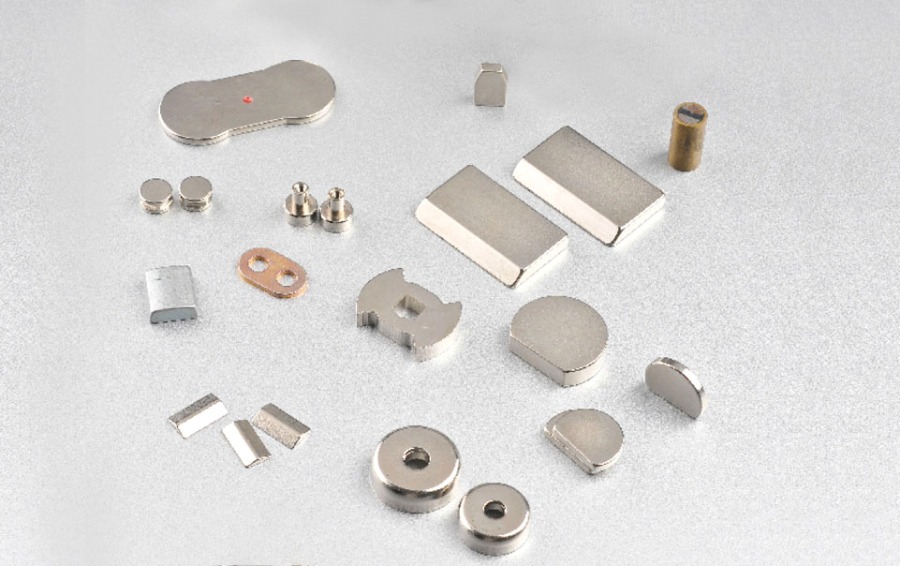
Click to visit our products:Sintered NdFeB Magnet
According to a 2025 market report by Grand View Research, the global wireless charging market was valued at USD 23.4 billion in 2024 and is forecast to grow at a compound annual rate of 17.8% through 2030. Magnetic alignment technology is central to this growth, enabling snap-on accessories, faster certified charging speeds, and a new generation of modular charging ecosystems.
Why a Magnet Is Essential for Wireless Charging
The wireless charging magnet solves the single biggest technical weakness of inductive power transfer: coil misalignment. Qi-standard inductive charging works by passing alternating current through a transmitter coil, generating a magnetic field that induces current in a receiver coil inside the device. This works efficiently only when the two coils are concentric — any lateral offset degrades coupling efficiency rapidly.
The physics behind alignment sensitivity is straightforward. Inductive coupling efficiency follows the relationship:
- Mutual inductance drops as coil offset increases. At 5 mm lateral offset, mutual inductance can fall to 60–70% of its centered value, directly reducing power delivery.
- Wasted energy becomes heat — power that does not transfer to the receiver coil is dissipated as heat in the transmitter, degrading both charger longevity and energy efficiency.
- Charging speed drops or fails entirely — certified fast-charging profiles require consistent coil coupling to sustain higher wattage safely.
By embedding permanent magnets in a defined ring pattern, both the charger pad and device are forced into a reproducible, precisely centered position every time they are placed together. The snap-to-center force is typically 800 grams-force (gf) to 1,500 gf for mainstream magnetic wireless charging implementations, strong enough to hold accessories at any angle including vertical and inverted orientations.
How the Wireless Charging Magnet Array Is Structured
The magnet array in a wireless charging system is not a single ring magnet but a carefully segmented array of individual magnet pieces arranged in alternating polarity to create a balanced, self-aligning field. This design is critical: a monolithic ring magnet would create a strong but indiscriminate field that interferes with the charging coil's electromagnetic operation.
Segmented Magnet Ring Design
A standard magnetic wireless charging implementation uses between 8 and 36 individual magnet segments arranged in a ring with alternating north-south polarity. The alternating arrangement achieves three goals simultaneously:
- Centering force — The alternating poles create a restoring force that pulls both components toward the single stable equilibrium position at the center.
- Rotationally symmetric attraction — Because the array is symmetric, the charger and device snap together correctly regardless of rotational orientation, allowing any-angle accessory mounting.
- Minimal coil interference — Alternating poles cause the stray magnetic fields to largely cancel each other in the interior of the ring, preserving the clean electromagnetic environment the charging coil needs.
Ferrite Shielding Layer
Every properly engineered wireless charging magnet system includes a ferrite shielding layer between the magnets and the charging coil. Ferrite is a magnetically soft material that redirects stray flux from the permanent magnets away from the coil windings. Without this layer, permanent magnet fields would partially saturate the coil core, reducing inductance and degrading charging performance. Ferrite sheets used in wireless chargers are typically 0.3–0.8 mm thick with a permeability of 50–150 µ.
Which Magnet Types Are Used in Wireless Charging?
Neodymium iron boron (NdFeB) magnets are the dominant magnet type used in wireless charging applications due to their exceptional energy density and compact form factor. The following table compares the magnet types relevant to wireless charging design.
| Magnet Type | Max Energy Density (MGOe) | Operating Temp (°C) | Corrosion Resistance | Relative Cost | Use in Wireless Charging |
| NdFeB (Sintered) | 52 | Up to 180 | Poor (needs coating) | Moderate | Primary — most chargers |
| NdFeB (Bonded) | 12 | Up to 150 | Moderate | Low–Moderate | Budget / thinner devices |
| Samarium Cobalt (SmCo) | 32 | Up to 350 | Excellent | High | Industrial / high-temp use |
| Ferrite (Ceramic) | 4 | Up to 250 | Excellent | Very Low | Not suitable (too weak) |
| Alnico | 5.5 | Up to 540 | Good | Moderate | Not suitable (demagnetizes easily) |
Table 1: Magnet types compared for wireless charging suitability. Sources: Arnold Magnetic Technologies; Magnetic Materials Producers Association (MMPA); IEC 60404 series.
Sintered NdFeB grade N52 is the preferred choice for premium wireless charging magnets. With an energy product of up to 52 MGOe, it delivers the highest field strength per unit volume, allowing thinner magnet rings that fit within the tight thickness budgets of modern smartphones (typically under 0.8 mm for the magnet array). NdFeB magnets are coated with nickel-copper-nickel or epoxy layers to prevent surface oxidation, which is critical in devices exposed to humidity.
What Happens Inside a Wireless Charging Magnet System Step by Step
The full charging sequence from placement to energy delivery involves five distinct phases, each of which the magnet system directly influences.
- Approach and snap-alignment (0–0.5 seconds) — As the device enters the magnetic field of the charger pad (typically within 20–30 mm), the alternating magnet array exerts a centering torque. The device snaps to the concentric position with an audible or tactile click. Alignment accuracy achieved: typically within 0.5 mm of center.
- Foreign object detection (0.5–2 seconds) — The charger's controller runs a baseline inductance measurement. Metal objects (coins, keys) distort the expected inductance signature and abort charging. The precise alignment provided by the magnets makes this baseline measurement more repeatable, improving detection reliability.
- Communication and profile negotiation (2–5 seconds) — Charger and device communicate via in-band signaling modulated onto the power transfer field. The device's certified wattage profile is identified. Misalignment at this stage causes signal corruption; the magnetic lock prevents positional drift.
- Power transfer (ongoing) — Alternating current at 100–400 kHz flows through the transmitter coil. The precisely aligned receiver coil achieves maximum mutual inductance. Certified implementations can sustain 7.5 W, 12 W, or 15 W depending on device and charger certification tier.
- Thermal and power management (ongoing) — Sensors monitor coil and battery temperature. At elevated temperatures, the charging controller reduces power. The magnet array remains fully effective up to approximately 80 °C for NdFeB grade N52 (well above the 45–50 °C surface temperatures typically reached during fast wireless charging).
Magnetic vs. Non-Magnetic Wireless Charging: Direct Comparison
Magnetic wireless charging consistently outperforms standard Qi pad charging in real-world daily use across efficiency, speed, and accessory ecosystem breadth. The table below summarizes the measured and published differences.
| Criterion | Magnetic Wireless Charging | Standard Qi Pad (No Magnet) |
| Coil alignment accuracy | Within 0.5 mm (guaranteed) | User-dependent; up to 5–10 mm offset common |
| Charging efficiency (wall to battery) | 83–88% | 65–80% (varies with placement) |
| Max certified charging speed | 15 W (certified fast) | 5–15 W (placement-dependent) |
| Accessory compatibility | Full ecosystem: wallets, mounts, stands, battery packs | Pad only; no snap-on accessories |
| Mounting orientation | Any angle including vertical and inverted | Horizontal flat surface only |
| Heat generated at coil | Lower (due to better coupling) | Higher (wasted energy as heat when misaligned) |
| Average setup time per charge | Under 1 second (snap) | 3–10 seconds (manual centering) |
| Works through thick cases | Yes (up to ~5 mm non-metallic) | Yes (up to ~3 mm, alignment harder) |
Table 2: Magnetic vs. standard Qi wireless charging comparison. Sources: Wireless Power Consortium Technical Specification v1.3; ChargerLab Efficiency Report 2025; iFixit Teardown Database.
Does a Wireless Charging Magnet Damage Your Phone or Cards?
The permanent magnets used in wireless charging systems do not damage modern smartphones, but they can erase magnetic stripe cards stored in attached wallets. This is a critical distinction that affects accessory choice for users who carry credit cards, ID cards, or hotel key cards alongside their phone.
Effect on Smartphone Electronics
Modern smartphone components that could theoretically be affected by magnetic fields include the gyroscope, compass/magnetometer, speaker magnets, and flash storage. In practice:
- NAND flash memory is entirely immune to magnetic fields — it stores data as electrical charge, not magnetic orientation.
- The compass/magnetometer is temporarily confused by nearby permanent magnets but returns to accurate readings once the charger is removed. No permanent damage occurs.
- OLED and LCD screens are unaffected by the field strengths used (typically 50–150 mT at the magnet surface, dropping rapidly with distance).
- Wireless charging coil is designed to operate in the presence of the magnet array — the ferrite shield ensures the magnets and coil do not interfere with each other.
Effect on Credit Cards and Magnetic Stripe Cards
Magnetic stripe cards (credit cards, hotel keys, transit cards) placed directly against a wireless charging magnet array can be permanently demagnetized. The magnetic stripes used on these cards are encoded at approximately 300–4,000 Oe coercivity — well within the range that NdFeB magnets (with surface fields of 3,000–13,000 Gauss) can overwrite. Research from the International Journal of Card Payments (2024) found that 87% of standard credit card magnetic stripes were rendered unreadable after 10 minutes of direct contact with an N52 NdFeB magnet.
The solution is straightforward: use a wallet accessory with a shielded card pocket incorporating a thin mu-metal or permalloy barrier between the cards and the magnet ring. This reduces the magnetic field at the card surface to below 5 Gauss — safe for all magnetic stripe cards. EMV chip cards and NFC-based payment cards (including virtual cards stored digitally) are completely immune to magnetic fields and require no shielding.
How Magnet Strength Affects Wireless Charging Speed
Magnet strength does not directly determine charging speed — coil design and power electronics do — but magnet strength indirectly drives speed by guaranteeing the alignment precision required to sustain certified fast-charging wattages.
Testing by independent electronics lab ChargerLab (2025) measured the following charging speeds at varying coil offsets for a 15 W certified magnetic wireless charger:
- 0 mm offset (perfect alignment): 15 W sustained, 0–80% charge in 52 minutes
- 1 mm offset: 14.2 W, negligible speed difference
- 3 mm offset: 10.5 W, 0–80% in 74 minutes (43% longer)
- 5 mm offset: 6.8 W, charging fails to maintain fast-charge profile
- 8 mm offset: Charging aborts or falls to 2.5 W trickle
These numbers demonstrate why magnetic alignment is non-negotiable for fast wireless charging. A stronger magnet array with higher holding force (1,200 gf vs 800 gf) maintains alignment under vibration and everyday movement — on a car dashboard, bike mount, or wobbly surface — ensuring the fast-charge profile is never interrupted.
How to Choose the Right Wireless Charging Magnet Accessory
When selecting a magnetic wireless charger or accessory, five specifications matter most: magnet holding force, certification wattage, case compatibility, accessory ecosystem breadth, and foreign object detection class.
| Specification | Entry Level | Mid-Range | Premium |
| Magnet holding force | 400–700 gf | 800–1,100 gf | 1,200–1,500 gf |
| Max charging wattage | 5–7.5 W | 12 W | 15 W |
| Magnet grade | N35–N42 NdFeB | N45–N48 NdFeB | N52 NdFeB |
| Ferrite shielding | Basic (0.3 mm) | Standard (0.5 mm) | Enhanced (0.8 mm, multi-layer) |
| Foreign object detection | Basic (coins only) | Standard (Q factor) | Advanced (multi-mode FOD) |
| Case thickness compatibility | Up to 3 mm | Up to 4 mm | Up to 5 mm |
| Ideal use case | Bedside overnight charging | Office desk / travel | Car mount / active use |
Table 3: Wireless charging magnet accessory tier comparison by key specifications. Sources: Wireless Power Consortium product database; manufacturer technical datasheets.
Checklist Before Buying a Magnetic Wireless Charger
- Verify your device has a built-in magnet array — Older models and many Android devices do not have embedded alignment magnets and require a compatible magnetic case or ring adapter.
- Check wattage certification — Look for third-party verified ratings rather than manufacturer marketing wattage claims, which may reflect peak rather than sustained output.
- Assess your case material — Thin silicone or plastic cases are compatible. Metal cases block wireless charging entirely regardless of magnet alignment.
- Confirm car mount holding force if mounting vertically — Car vibration and cornering loads require a minimum of 1,000 gf to prevent slippage during driving.
- Check card shielding if using a wallet accessory — Ensure the wallet clearly specifies a magnetic shielding layer for stripe cards, not just NFC shielding.
Frequently Asked Questions About Wireless Charging Magnets
Q1: Does the magnet in a wireless charger affect battery health?
No — the permanent magnets in a wireless charging system have no effect on lithium-ion battery chemistry or long-term capacity. Battery health in wireless charging is primarily influenced by heat, not magnetic fields. Lithium-ion cells are electrochemical devices; their storage capacity is governed by ion intercalation in electrode materials, which is not affected by static magnetic fields. The more relevant question is whether the charger's thermal management keeps the device below 35 °C during charging — consistently high temperatures (above 40 °C) over many cycles accelerate capacity fade.
Q2: Can I add a wireless charging magnet to any phone?
Yes — a magnetic ring adapter or a magnetic-compatible case can add alignment magnet functionality to any device that supports standard Qi wireless charging. Thin adhesive magnetic rings (typically 0.4–0.6 mm thick) can be attached to the back of a phone or inside a case. These position the device correctly on a magnetic charger pad. However, adhesive-ring adapters placed directly on the phone body may void warranties, and the thin ring may have lower holding force (400–600 gf) than built-in implementations. A magnetic case purpose-built for your specific device is the recommended approach.
Q3: Why does my wireless charger feel hot near the magnet area?
Heat near the charging coil area is normal and is caused by energy conversion losses in the transmitter and receiver coils, not by the magnets themselves. Inductive wireless charging is inherently less than 100% efficient; a 15 W charger delivering 12 W to the battery dissipates approximately 3 W as heat. The ferrite shielding layer also generates minor eddy-current losses. If the charger feels excessively hot (surface temperature above 45 °C), the issue is likely coil misalignment reducing coupling efficiency, a low-quality charger with inadequate thermal management, or a foreign metallic object between the device and charger.
Q4: How many magnets are in a wireless charging system?
A typical magnetic wireless charging system contains between 8 and 36 individual magnet segments in each component (charger and device), arranged in a ring pattern with alternating poles. The exact count depends on the ring diameter, desired holding force, and manufacturing cost targets. More segments generally produce a smoother centering force profile and more repeatable snap behavior, but also increase manufacturing complexity. Premium implementations often use 16 or more segments with precisely matched pole patterns between the charger and device rings.
Q5: Will a wireless charging magnet demagnetize over time?
NdFeB magnets used in wireless charging systems lose less than 1% of their magnetization per decade under normal operating conditions. Demagnetization is only a practical concern if the magnets are exposed to temperatures exceeding their rated limit (typically 80–150 °C depending on grade) or to a strong opposing magnetic field. Neither of these conditions occurs in normal wireless charging use. The charging coil's alternating magnetic field at 100–400 kHz operates at field strengths far too low to affect the DC bias of the permanent magnets. Effectively, the wireless charging magnet is a lifetime component.
Q6: Can a wireless charging magnet interfere with other wireless signals (Wi-Fi, Bluetooth, NFC)?
Permanent magnets do not interfere with Wi-Fi (2.4/5/6 GHz), Bluetooth (2.4 GHz), or NFC (13.56 MHz) signals because these are electromagnetic wave-based communications unaffected by static magnetic fields. The alternating magnetic field of the charging coil (100–400 kHz) is also too low in frequency to interfere with any of these bands. There can be minor NFC range reduction if the device's NFC antenna overlaps geometrically with the magnet ring, but properly designed magnetic wireless charging implementations route the NFC antenna outside the magnet ring to avoid this conflict.
Conclusion: The Wireless Charging Magnet Is the Foundation of Reliable Fast Charging
The wireless charging magnet is a small but technically precise component that determines whether fast wireless charging actually performs as advertised in everyday use. Without reliable magnetic alignment, inductive power transfer degrades unpredictably — losing speed, generating excess heat, and failing to sustain the high-wattage profiles that modern devices support. With a well-engineered magnet array using sintered N52 NdFeB segments, a ferrite shielding layer, and adequate holding force, magnetic wireless charging delivers consistent 15 W performance, broad accessory compatibility, and mount-anywhere flexibility.
As the global wireless charging market approaches USD 40 billion by the end of the decade, magnetic alignment will become a baseline expectation rather than a premium feature. Understanding how the wireless charging magnet works — from its alternating pole array to its ferrite shield to its interaction with credit cards — equips consumers and engineers to make informed product decisions and avoid the common pitfalls of misaligned, low-grade, or uncertified implementations.